Why Use Aerospace Wire Harnesses?
In the fast-evolving aerospace industry, reliability and safety are paramount. One often-overlooked yet vital component that ensures both is the aerospace wire harness. These intricate bundles of cables, connectors, and protective elements form the backbone of electrical systems in aircraft, satellites, and spacecraft. Without a well-engineered wiring solution, modern aviation would face severe operational risks.
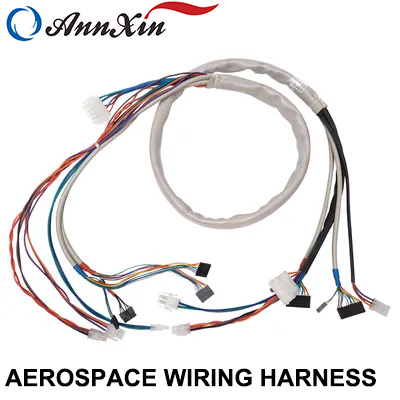
1. The Backbone of Electrical Connectivity
Every aircraft system, from navigation to communication, relies on flawless electrical transmission. An aerospace connector harness provides organized pathways that prevent tangled wiring and electrical interference. The structured design also simplifies maintenance, allowing technicians to quickly identify issues.
For example, a waterproof aerospace wiring harness ensures stable signal transmission even in extreme altitudes and harsh weather conditions. This added protection against moisture and vibration is crucial for maintaining flight safety.
2. The Role of Advanced Connectors
Specialized connectors play a pivotal role in the aerospace sector. The M12 wire harness and M16 aviation connector have become industry standards because of their durability, compact design, and ability to handle high-frequency signals. Their waterproof nature allows them to withstand high pressure and temperature fluctuations.
These connectors are not only used in commercial jets but also in military drones and space exploration equipment. By integrating an M12/M16 Waterproof Aviation Connector Aerospace Custom Wire Harness, engineers can ensure both reliability and adaptability across various platforms.
3. Enhancing Performance with Custom Solutions
Standard wiring assemblies cannot meet the unique challenges of aerospace. That’s why customized solutions, such as aviation cable assembly systems, are increasingly in demand. Tailored harnesses optimize space, reduce weight, and increase overall system efficiency.
Furthermore, aerospace manufacturers are now using materials with enhanced shielding to minimize electromagnetic interference (EMI). This ensures uninterrupted data flow, even in high-radiation environments like outer space.
4. Safety, Compliance, and Durability
The aerospace sector has zero tolerance for failure. Regulatory authorities enforce strict compliance standards, requiring every aerospace connector harness to undergo rigorous testing. From fire resistance to tensile strength, each component must pass quality benchmarks before it is approved for use in aircraft.
In addition, harnesses must remain durable over long operational lifespans. Aerospace vehicles are expected to perform in extreme cold, heat, and atmospheric pressure, which places enormous stress on wiring systems. The waterproof aerospace wiring harness offers an ideal solution, ensuring maximum safety with minimum downtime.
5. The Future of Aerospace Wiring Harness Technology
As aviation technology continues to advance, wiring harnesses must evolve accordingly. Future trends include:
Miniaturization: Smaller, lighter connectors to save fuel and increase efficiency.
Smart harnesses: Integrated sensors to detect damage or overheating in real time.
Eco-friendly materials: Harnesses designed with sustainable, recyclable materials to reduce environmental impact.
Digital twins: Virtual models that simulate harness performance under different conditions.
These innovations are set to redefine how engineers approach aerospace design in the coming decades.
Conclusion: Preparing for the Next Generation
Aerospace wire harnesses may remain behind the scenes, but they play an indispensable role in modern aviation. From ensuring safety and reliability to enabling advanced technologies, they are the hidden lifelines of aircraft and spacecraft.
If you’re curious about how individual components like the M16 aviation connector can influence overall system performance, don’t miss our next article:
👉 “How Do Aviation Connectors Shape the Future of Aerospace Systems?”





Tel: +86-13712235188 +86-13728244346
Address:101, Building 2, No. 281, Houjie Section, Guantai Road, Houjie Town, Dongguan, Guangdong, China