What Does a Wire Harness Assembler Do?
What Does a Wire Harness Assembler Do?
Behind every advanced vehicle, piece of machinery, or electronic device lies a complex wiring system that powers, controls, and protects its operation. The creation of these systems is made possible by skilled professionals known as wire harness assemblers. Their work combines precision engineering, manual dexterity, and strict quality control to ensure reliable electrical connectivity across industries.
.jpg)
1. The Role of a Wire Harness Assembler
A wire harness assembler is responsible for producing wiring systems that deliver electrical signals and power within equipment or vehicles. They follow technical blueprints, electrical schematics, and manufacturing procedures to assemble wires, connectors, and protective materials.
Their primary goal: create reliable and efficient Customized High Quantity Wire Harness Cable Assembly Custom Electric Vehicle Motorcycle Wiring Harness solutions that meet both design and safety standards.
Assemblers play a critical role in sectors such as automotive, aerospace, robotics, and renewable energy equipment manufacturing.
2. Daily Responsibilities
Reading wiring diagrams and work instructions to understand design layouts.
Cutting, stripping, and crimping wires using specialized machines and hand tools.
Inserting terminals and connectors into housings like DEUTSCH DT, Molex MX150, or AMP Superseal 1.5 series.
Applying insulation and protection such as PET braided sleeving, corrugated conduit, and heat-shrink tubing.
Testing assemblies for continuity, resistance, and insulation integrity.
Labeling and packaging harnesses for final inspection and delivery.
Each task demands attention to detail and understanding of quality standards such as IATF 16949 and IPC/WHMA-A-620.
3. Tools and Equipment Used
Automatic wire cutting and stripping machines
Crimping presses for terminal connection
Testing fixtures for electrical validation
Overmolding and sealing systems
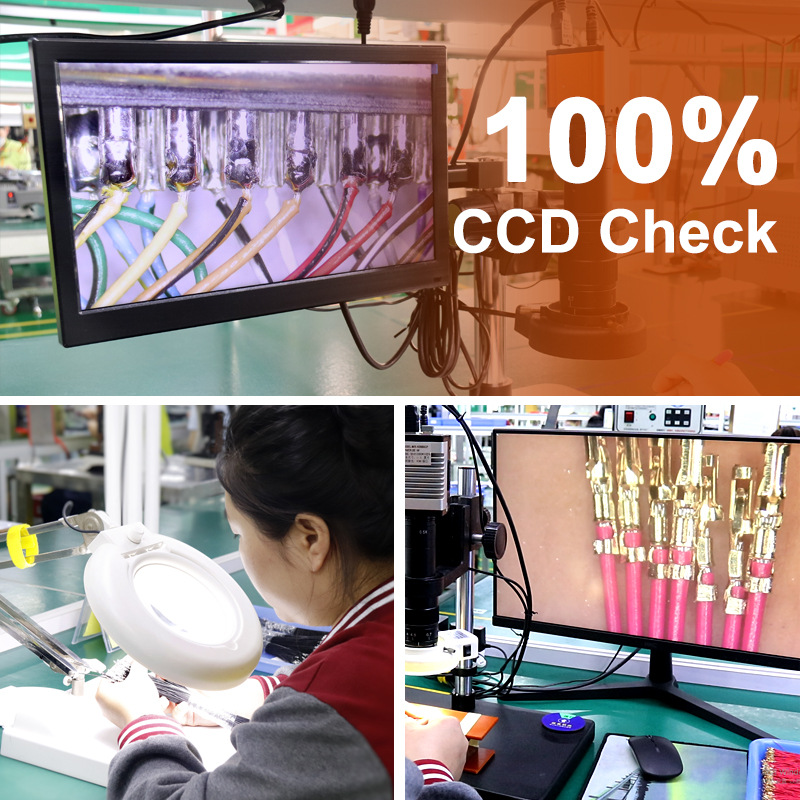
Visual inspection stations for connector orientation and integrity
Every step is part of a controlled APQP production process, ensuring traceability and repeatability across mass production environments.
4. Skills and Qualifications
Technical literacy – interpreting electrical drawings and 3D layouts.
Manual dexterity – handling fine wires and terminals.
Attention to detail – identifying subtle defects or inconsistencies.
Knowledge of compliance standards – IPC/WHMA-A-620, ISO 9001, and IATF 16949.
Team collaboration – working within production cells and communicating with quality engineers.
Many assemblers receive formal training or certification from industry programs, enabling them to work on complex products like OEM motorcycle wiring harnesses and EV high-voltage assemblies.
5. Quality Control and Testing Responsibilities
Assemblers conduct multiple levels of inspection before a harness leaves the workstation, including:
Continuity and HiPot testing for every circuit.
Resistance measurement to detect crimp or terminal issues.
Environmental validation, ensuring durability under heat and vibration.
Visual inspection for connector alignment, wire routing, and proper labeling.
A professional Custom wiring harness manufacturer relies heavily on assemblers to ensure that each Customized High Quantity Wire Harness Cable Assembly Custom Electric Vehicle Motorcycle Wiring Harness meets global compliance and customer-specific requirements.
6. The Importance of Precision and Process Control
Wire harness assembly is not just about connecting wires — it’s about consistency, efficiency, and documentation. Assemblers follow PPAP documentation and DFM-optimized processes to ensure every harness can be replicated with zero deviation. This is especially crucial for mass production wire harness projects used in EVs and motorcycles.
7. The Future of Wire Harness Assembly
With the rise of automation and smart factories, the role of wire harness assemblers is evolving. Robots now assist in crimping, cutting, and routing, but human expertise remains vital for solving complex assemblies and ensuring quality under unique configurations.
Conclusion
A wire harness assembler is the unsung hero behind every functional electrical system — transforming design blueprints into tangible, high-performance wiring networks. Their meticulous craftsmanship ensures that modern electric vehicles, motorcycles, and industrial machines operate reliably every day.
From manual assembly to automated testing, these professionals ensure that each Customized High Quantity Wire Harness Cable Assembly Custom Electric Vehicle Motorcycle Wiring Harness meets the highest global standards.
Next article preview:
👉 What is the purpose of the engine wiring harness? — Explore how this critical harness connects sensors, ECUs, and actuators to keep engines running efficiently.





Tel: +86-13712235188 +86-13728244346
Address:101, Building 2, No. 281, Houjie Section, Guantai Road, Houjie Town, Dongguan, Guangdong, China