Is a 24-Pin ATX Cable Right?
Is a 24-Pin ATX Cable Right?
In modern electronics and industrial systems, the role of power distribution components is critical. Among these components, the 24-pin cable harness has become a standard solution, providing stable and organized electrical connections. But how do you know if a 24-Pin ATX Power Cable Harness – Durable Multi-Color Wire Connector for Electronics & Industrial Power Systems is the right choice for your application? Let’s explore its structure, benefits, and use cases.
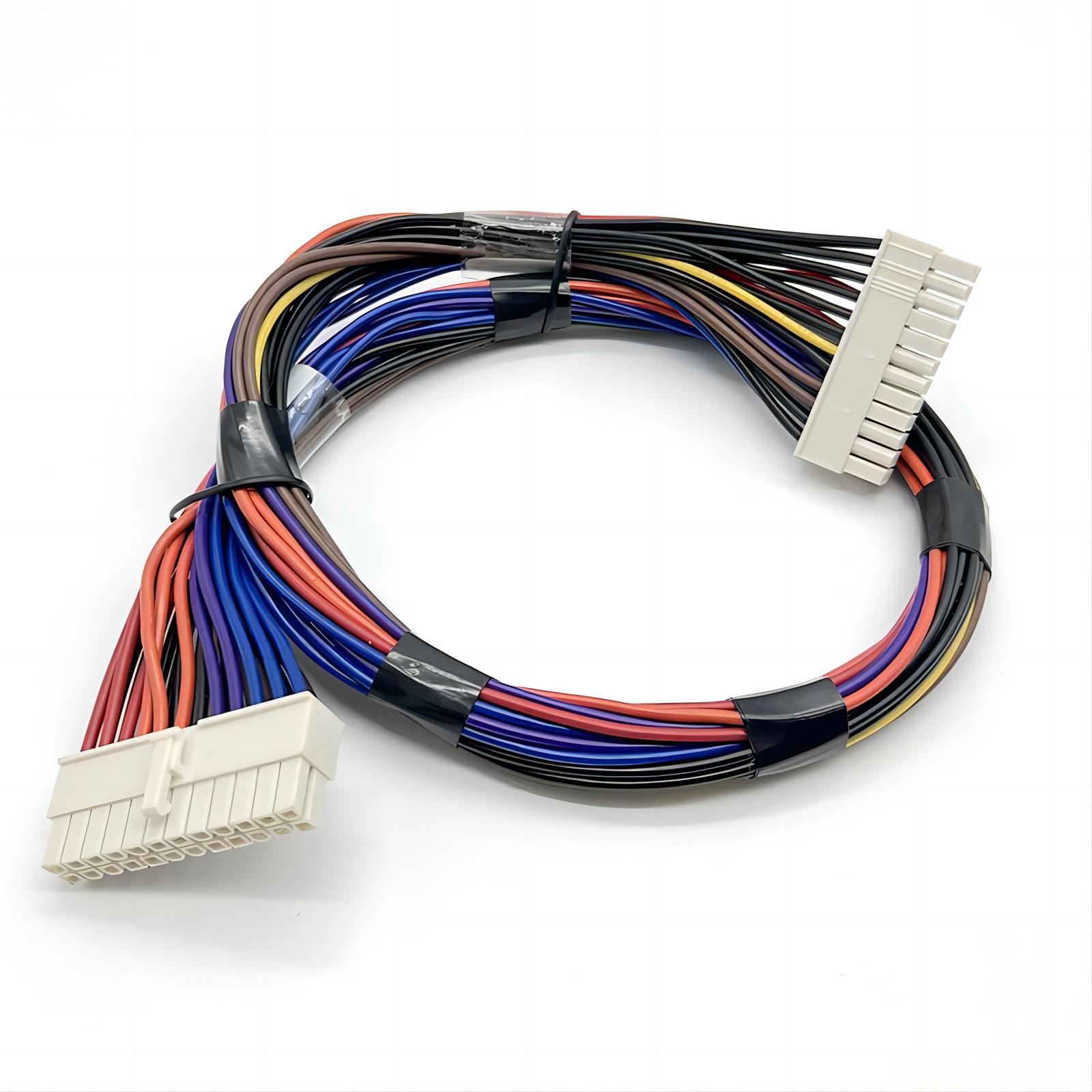
1. What Makes the 24-Pin Cable Harness Important?
The 24 pin wire harness is more than just a collection of wires. It represents a carefully engineered solution to manage power delivery across multiple devices. In computing, the ATX power connector is the foundation of motherboard power supply systems, ensuring every component receives stable current. For industrial applications, the same concept applies: organized wiring ensures reliability and safety.
Unlike single cable solutions, a multi-color wiring harness simplifies identification and troubleshooting. Each color designates a specific function, reducing confusion during assembly or repair.
2. Why Choose a Durable ATX Connector?
Durability is a core concern when designing or selecting a power solution. A durable ATX connector not only extends the lifespan of your system but also prevents failures caused by repeated plug-ins and thermal stress.
Mechanical strength: These connectors are built to handle repeated use without degrading performance.
Stable performance: Consistent power distribution is crucial in both computer PSU wiring and heavy-duty industrial power cable systems.
Versatility: The same electronic power harness can be integrated into computers, test equipment, or industrial machines.
In short, choosing a reliable harness minimizes downtime and ensures continuous performance.
3. How Does Multi-Color Wiring Enhance Safety?
Safety is one of the most valuable benefits of using a multi-color wiring harness. By distinguishing wires with different colors, engineers and technicians reduce the risk of cross-connection errors. For example:
Yellow wires may represent +12V power.
Red wires typically supply +5V.
Black wires are ground connections.
Such clarity enhances both assembly speed and error prevention. In industrial environments, where downtime is costly, this clarity becomes indispensable.
4. Where Are 24-Pin Cable Harnesses Used?
The 24-pin cable harness is widely adopted across sectors:
Computers & Servers: Delivering power through computer PSU wiring to keep systems stable.
Electronics Manufacturing: Supporting assembly lines with efficient electronic power harness solutions.
Industrial Power Systems: Acting as a robust industrial power cable that withstands demanding environments.
Whether in a home PC or a factory machine, the 24 pin wire harness provides consistent results.
5. What Makes This Harness a Long-Term Investment?
When choosing connectors, you should look beyond immediate needs. A 24-Pin ATX Power Cable Harness – Durable Multi-Color Wire Connector for Electronics & Industrial Power Systems is not just an accessory; it is an investment in long-term stability.
Future-proof design: Compatible with standard ATX motherboards and industrial setups.
Ease of maintenance: Simplified wiring reduces service time.
Reliability under stress: Even under continuous load, the durable ATX connector ensures safe operation.
Thus, businesses and individuals alike benefit from its adaptability and cost-effectiveness.
Conclusion: Should You Use It?
If your goal is reliability, safety, and efficiency, then the 24-pin cable harness with a durable ATX connector is an excellent choice. Whether you are building a high-performance computer, wiring industrial systems, or managing complex electronic power harness designs, this solution delivers long-term value.
👉 Curious about how the ATX power connector plays a more specific role in powering modern systems? Continue reading the next article to explore deeper →Why Choose an ATX Connector?





Tel: +86-13712235188 +86-13728244346
Address:101, Building 2, No. 281, Houjie Section, Guantai Road, Houjie Town, Dongguan, Guangdong, China