Can USB-C Charge at 240W?
USB-C has quickly become the global standard for charging and data transfer, replacing multiple proprietary connectors with one universal solution. With the introduction of USB Power Delivery (USB PD) 3.1, the standard now supports charging levels up to 240W. This massive increase has sparked questions among consumers about compatibility, safety, and whether such power levels are practical for smaller devices like smartphones. In this article, we explore whether USB-C can really charge at 240W, how it works, and when such capability matters.
1. The Technology Behind 240W Charging
USB Power Delivery 3.1 is the key to achieving high-wattage charging. By expanding voltage levels up to 48V and current up to 5A, cables such as a 240W 48V/5A Data Cable are now capable of powering devices like gaming laptops and desktop replacements. While smaller devices don’t need this much power, having a cable designed for Charging & Data Transmission at this level ensures safe and stable operation across different devices.
2. Why Do We Need 240W USB-C?
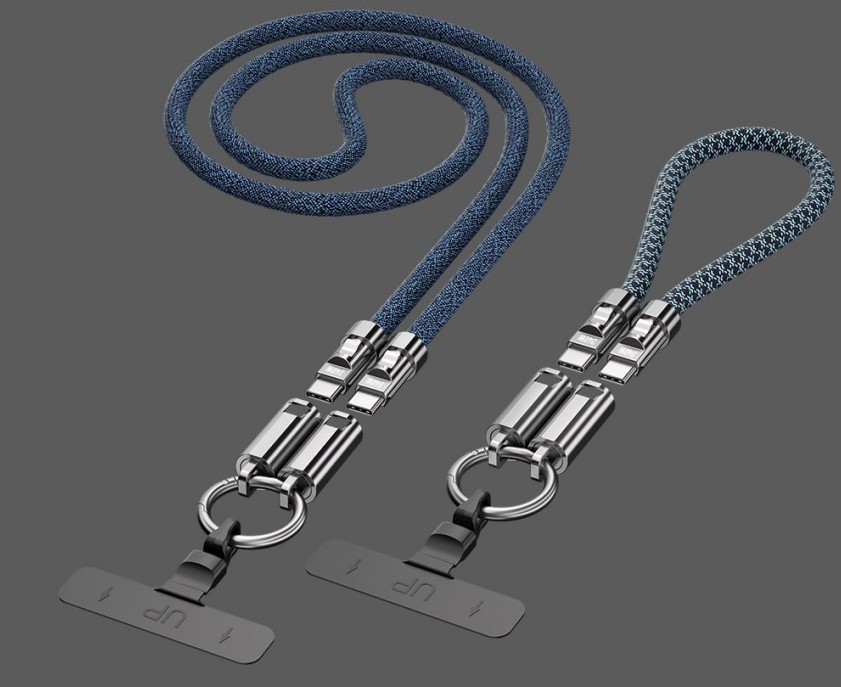
The main advantage of 240W support is versatility. A single cable like the 240w Zinc Alloy Nylon Braided 48V/5A Type-C Charging Data Transmission Lanyard Cable can power a demanding gaming laptop one moment and then charge an iPhone the next. This eliminates the need for multiple chargers and cables, simplifying travel and reducing clutter. The addition of Zinc Alloy+Nylon Braided Cable construction also ensures durability under heavy use.
3. Practical Applications of 240W USB-C
While you won’t see 240W being applied to smartphones, the technology plays a crucial role in modern electronics:
4. Safety and Certification
One of the biggest concerns with higher wattages is safety. To address this, the USB Implementers Forum (USB-IF) requires cables to be certified for such levels. When using a 240w Lanyard Data Cable, the embedded e-marker chip communicates with the device and power source to regulate the voltage and current. This ensures the iPhone or other devices never draw more power than designed.
5. Conclusion
Yes, USB-C can indeed charge at 240W, but it depends on having the right combination of charger, cable, and device. While your iPhone will not use anywhere close to this level, investing in a robust iPhone 17 Type-C 240w Lanyard Data Cable or similar accessory ensures future compatibility, durability, and reliability across all devices you own.
👉 Click here to read the next article: How to tell if a USB-C cable can transfer data on an iPhone?